National Testing Agency: "The Great Equaliser"
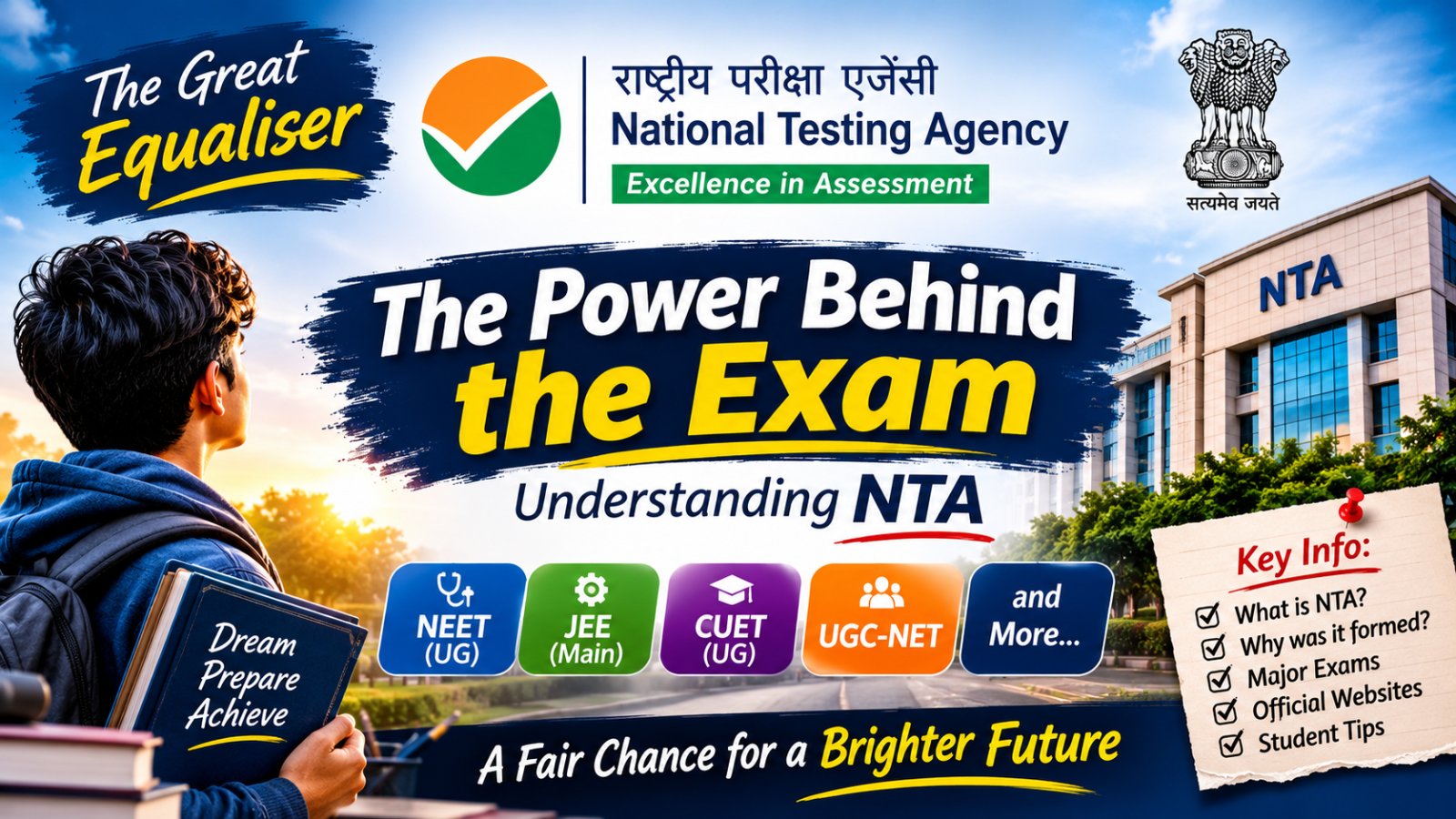
National Testing Agency: "The Great Equaliser"
There was a time when students had to travel from one city to another, sometimes hundreds of kilometres, simply to appear for an entrance examination. Different universities had different examinations, different rules and different methods of selection. For a student, getting admission could become almost as difficult as passing the examination itself.
Then came an organisation that aimed to bring more order, fairness and transparency to this complicated system: the National Testing Agency (NTA).
Today, from medical and engineering entrance examinations to university admissions and eligibility tests, NTA has become an important name in Indian education. But what exactly is NTA? Why was it established? What examinations does it conduct? And, perhaps most importantly, what should students know before visiting its official website?
Let us understand this organisation in simple English.
What Is the National Testing Agency (NTA)?
The National Testing Agency, commonly known as NTA, is an autonomous organisation established by the Government of India under the Ministry of Education (formerly the Ministry of Human Resource Development).
It was established in November 2017 as an independent and self-sustained testing organisation. Its main responsibility is to conduct entrance examinations in an efficient, transparent and standardised manner.
The basic idea behind NTA is simple: students should get a fair opportunity to demonstrate their knowledge and abilities, regardless of where they come from.
Before NTA, many entrance examinations were organised separately by different institutions. A common testing agency was expected to improve the quality of examinations and reduce unnecessary difficulties for students.
Why Was NTA Established?
The establishment of NTA was not just an administrative decision. It was an attempt to solve some long-standing problems in the Indian examination system.
Its major objectives include:
- Transparency: Making examination procedures more open and reliable.
- Fairness: Providing equal opportunities to candidates from different backgrounds.
- Standardisation: Maintaining a common standard for entrance examinations.
- Research: Improving examination methods through educational and scientific research.
- Technology: Using modern technology to make examinations more efficient.
In simple words, NTA wants to make examinations more organised so that students can concentrate on their preparation rather than unnecessary complications.
Important Examinations Conducted by NTA
NTA conducts several important examinations that help students enter higher education institutions.
Some of its major examinations are:
1. NEET (UG): The National Eligibility cum Entrance Test is conducted for admission to undergraduate medical courses such as MBBS, BDS, BAMS, BHMS and other relevant programmes.
2. JEE (Main): This examination is conducted for admission to undergraduate engineering programmes at institutions such as NITs and other participating institutions. It also serves as the first stage for JEE (Advanced).
3. CUET (UG): The Common University Entrance Test provides a common entrance examination for undergraduate admissions at participating universities.
4. UGC-NET: This examination determines eligibility for Assistant Professor positions and Junior Research Fellowship, subject to the applicable rules.
5. CSIR-UGC NET: It is conducted for candidates interested in research and academic careers in science-related subjects.
6. Other Examinations: NTA also conducts examinations such as CMAT, GPAT, JIPMAT and SWAYAM examinations.
NEET and NTA: An Important Connection
Among all the examinations conducted by NTA, NEET (UG) deserves special attention.
For thousands of students, becoming a doctor is not simply a career choice; it is a dream that begins during school education. NEET provides a common entrance examination for undergraduate medical admissions across India.
NTA has been conducting NEET (UG) since 2019.
The examination covers Physics, Chemistry and Biology. Students must carefully follow the official syllabus, eligibility requirements and examination instructions before applying.
However, there is one important thing that students often misunderstand: NTA conducts the examination, but it does not allot medical college seats or conduct the counselling process.
Medical counselling and seat allocation are handled by the respective authorised counselling bodies, including the Medical Counselling Committee for the applicable All India Quota seats. State counselling authorities handle their respective admissions.
This distinction is important because students sometimes approach the wrong authority when they have questions about admission.
Official NTA Websites: Where Should Students Go?
The internet is full of websites claiming to provide examination updates, admit cards and results. Unfortunately, not every website provides accurate information.
Students should always prefer official sources.
Here are two important websites:
- NTA Official Website: www.nta.ac.in – For examination notices, announcements, examination calendars and other official information.
- NEET Official Website: neet.nta.nic.in – For NEET-related notifications, application information, answer keys, admit cards and results.
A small but useful habit can save students considerable trouble: check the official notification before believing information shared through social media or unofficial websites.
What Should Students Remember Before Applying?
An examination application is a small process, but a mistake in it can create unnecessary problems.
Students should remember these points:
- Read the official information bulletin carefully.
- Check eligibility criteria before applying.
- Enter personal details correctly.
- Keep required documents updated.
- Download and save the confirmation page after successful submission.
- Check examination notices regularly.
- Never depend on unofficial websites for important examination information.
NTA also publishes notices about answer keys, correction windows, examination centres and results. Students should not ignore these announcements.
The Bigger Picture: What Does NTA Mean for Indian Students?
An examination is more than a collection of questions printed on paper. It is a system that connects a student's hard work with future opportunities.
NTA represents an effort to make that system more organised and accessible. However, conducting an examination fairly is only one part of the larger educational journey. Good teaching, equal learning opportunities, proper guidance and affordable education are equally important.
A student from a small village and a student from a big city may sit for the same examination, but their educational journeys can be very different. A truly fair education system must recognise this difference too.
Perhaps this is the most important way to understand NTA: it is not merely an examination agency; it is an important part of the machinery through which millions of young Indians seek opportunities in higher education.
And for every student preparing for an entrance examination, one simple piece of advice remains valuable: trust your preparation, read official instructions and never allow rumours to become your source of information.
Because the road to a successful career begins with knowledge, but it also requires the right information at the right time.
Online and home tutors for 2,700+ subjects. Book a free trial class today. tutormitra.com →